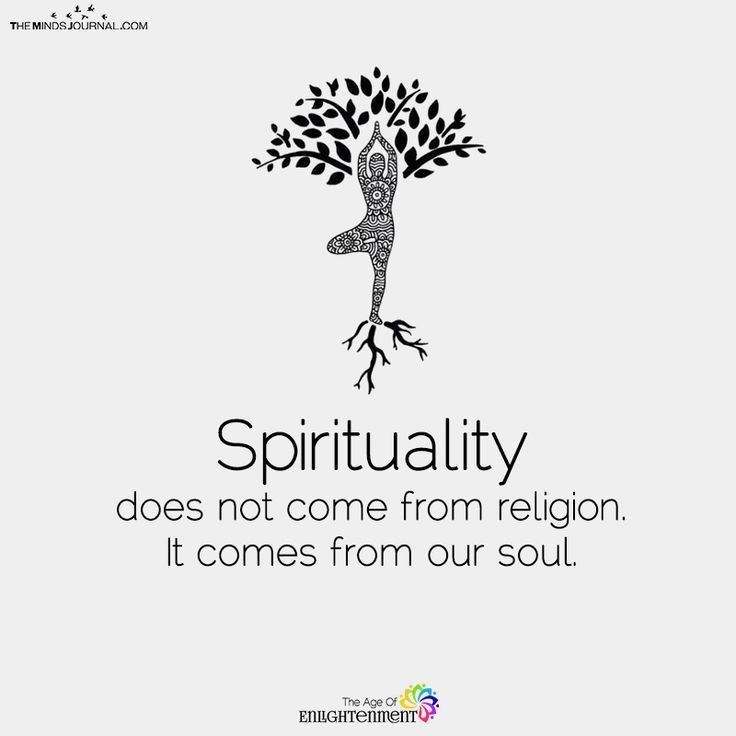
Lately I have been a part of several discussions centered around spirituality, discovering our own idea of a higher power, and how to reconcile spiritual principles in our recovery with those we may have been taught when we were younger in the form of religion. I don’t want to alienate those who take solace in their religion or established belief system, and that is not my intent when I say that in recovery I think it is important that every individual needs to find his or her own idea of a higher power. They may not call it God. Jesus may not be their savior. And that is perfectly okay, and it is a concept that needs to be respected and upheld when it comes to finding spirituality in recovery.
I heard a statement the other day that I could really relate to, ‘religion is for people who are afraid of going to Hell; spirituality is for people who have been there.’ I’d be lying if I were to say that suddenly, in the infancy of my recovery, that I believe in God. Jesus and the idea of a Christian God are ideas that still make me cringe a little bit when I hear those words. It has given me some comfort that by embarking on a recovery journey that requires a significant degree of spirituality, in fact it is a journey that is totally centered around it, that I don’t have to accept Jesus as my lord and savior. I don’t need to be born again. I don’t need to praise Allah.
All I need to do is believe in a higher power whose power is greater than my own and on whom I can depend on to guide me in my life and, most importantly, keep me clean. As I grow in my recovery and learn to live by spiritual principles such as honesty, open-mindedness and willingness, I am beginning to see the impact it is having on my life. In fact, I am starting to see evidence of a higher power everywhere I look.
When I first entered recovery, I was totally spiritually bankrupt. I was totally self-centered and my only focus in life was to find the ways and means to get high again. Nevertheless, I entered recovery with an attitude of open-mindedness and willingness to succeed in my recovery. I knew that I was living completely wrong. I knew that I needed to drastically change my ways if I wanted to survive.
So basically on blind faith, I entered a program in which I saw people that seemed to have gotten a grasp on their disease and who were living lives in a way that I wanted to emulate. When I asked how they managed this they always, 100% of the time, cited the spiritual principles that they were taught in the program as the sole reason for their success.
When they were able to become willing to accept a new way of life, without any reservations, and by living the values they were taught day in and day out, they were able to find recovery.
So if you are new to recovery and are turned off by the talk of God, please know that you are not alone. A higher power and God are not the same thing. You don’t need to be religious to achieve recovery.
All you need to do is find what works for you. You need to put your faith in a higher power by admitting you have no power over your own disease. Allow your program to lift you up. Take the suggestions you are given. If you do, I promise you that your life will get better. I promise.
If you are familiar with 12-step recovery literature you are going to find the language I am using in this post, and in most of my previous posts, to be rather cliche. I am well aware of the fact that my writing is indoctrinated with the core beliefs of Narcotic’s Anonymous, because that is the program that has been changing my life.
I don’t, however, believe that NA is the only way to achieve lasting recovery. I think that the principles that it teaches and the values it instills in its members are the foundational concepts that need to be worked into the day to day lives of someone who wants to achieve recovery.
And nobody said it was easy. It is tremendously difficult. But it gets better. Day by day you will grow stronger.
G.M.C., 5.3.2020, Day 165
 Daily Recovery